

Hey there! As a supplier of High Strength Steel Wire, I often get asked this question: "Can high strength steel wire be welded?" Well, let's dig into this topic and find out.
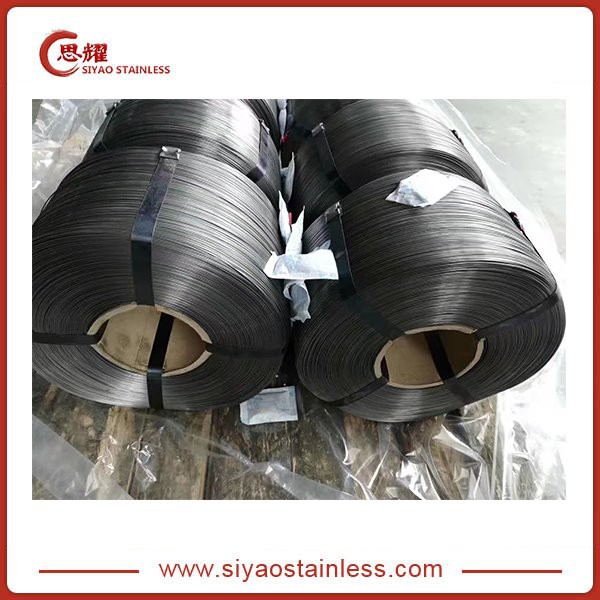
First off, let's understand what high strength steel wire is. High strength steel wire, like the ones you can find on our website High Strength Steel Wire, is known for its excellent mechanical properties. It's made from special alloys and goes through a series of heat - treatments and cold - drawing processes to achieve its high strength. High strength steel wire is used in a wide range of applications, from construction to automotive industries.
Now, back to the main question: welding high strength steel wire. The short answer is yes, it can be welded, but it's not as straightforward as welding regular steel wire. High strength steel wire has a higher carbon content and other alloying elements, which can cause some challenges during the welding process.
One of the main issues is the formation of hard and brittle microstructures in the heat - affected zone (HAZ). When you weld high strength steel wire, the heat from the welding process can change the structure of the steel in the area around the weld. If not properly controlled, this can lead to a decrease in ductility and an increase in the risk of cracking. For example, in some high strength carbon steel wires, the high carbon content can cause the formation of martensite in the HAZ. Martensite is a very hard and brittle phase, and it can make the welded joint more prone to failure under stress.
Another challenge is the risk of hydrogen embrittlement. Hydrogen can be introduced into the weld during the welding process, especially if the welding environment is not properly controlled. Hydrogen can diffuse into the steel and cause embrittlement, which means the steel becomes more likely to break without much deformation. This is a serious concern when welding high strength steel wire, as it can significantly reduce the reliability of the welded joint.
So, how can we overcome these challenges? Well, there are several techniques and precautions that can be taken.
Pre - heating is one of the most important steps. By pre - heating the high strength steel wire before welding, we can slow down the cooling rate in the HAZ. This helps to prevent the formation of hard and brittle microstructures. The pre - heating temperature depends on the type and thickness of the steel wire. For some high strength carbon steel wires, pre - heating to a temperature of around 100 - 200°C can be effective. You can learn more about high strength carbon steel wire on our page High Strength Carbon Steel Wire.
Using the right welding process is also crucial. Different welding processes have different heat inputs and characteristics. For high strength steel wire, processes like gas tungsten arc welding (GTAW) or gas metal arc welding (GMAW) with appropriate shielding gases can be a good choice. These processes allow for better control of the welding parameters, such as heat input and welding speed.
Post - weld heat treatment (PWHT) is another important step. After welding, the welded joint can be heat - treated to relieve residual stresses and improve the microstructure. PWHT can involve processes like stress - relieving annealing or tempering. Stress - relieving annealing can reduce the internal stresses in the welded joint, while tempering can improve the ductility of the HAZ by transforming the hard martensite into a more ductile phase.
In addition to these technical aspects, it's also important to have skilled welders who are familiar with the properties of high strength steel wire. Welders need to be trained to understand the unique challenges of welding high strength steel and to follow the proper procedures.
Now, let's talk about the benefits of being able to weld high strength steel wire. If you can successfully weld high strength steel wire, it opens up a lot of possibilities for different applications. In the construction industry, for example, welded high strength steel wire can be used to create strong and lightweight structures. In the automotive industry, it can be used to manufacture components that require high strength and good fatigue resistance.
As a supplier of high strength steel wire, we understand the importance of providing our customers with not only high - quality products but also the knowledge and support they need. We have a team of experts who can offer advice on welding high strength steel wire, including the best pre - heating and post - weld heat treatment procedures.
If you're in the market for high strength steel wire and have questions about welding or any other aspects, don't hesitate to reach out. Whether you're a small - scale manufacturer or a large - scale construction company, we're here to help you make the most of our high strength steel wire products. We can work with you to find the right solution for your specific needs and ensure that you get the best results from your welding projects.
In conclusion, while welding high strength steel wire presents some challenges, it is definitely possible with the right techniques, precautions, and expertise. By understanding the properties of high strength steel wire and taking the necessary steps to overcome the challenges, we can create strong and reliable welded joints.
If you're interested in purchasing high strength steel wire or have any questions about welding it, feel free to contact us. We're looking forward to starting a conversation with you and helping you with your procurement needs.
References:

- AWS D1.1/D1.1M:2020, Structural Welding Code - Steel
- ASME Boiler and Pressure Vessel Code, Section IX - Welding and Brazing Qualifications
- "Metallurgy of Welding" by Richard W. Messler Jr.