

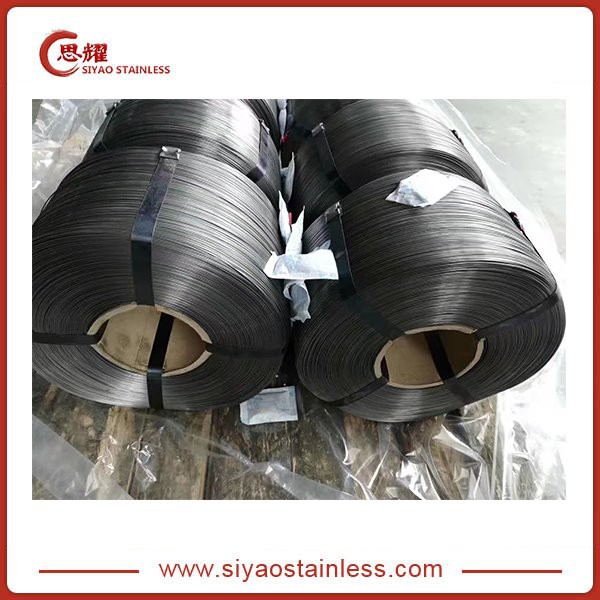
As a supplier of High Strength Steel Wire, I've witnessed firsthand the numerous benefits it offers across a wide range of industries. High Strength Steel Wire, available at High Strength Steel Wire, is renowned for its exceptional tensile strength, durability, and resistance to deformation, making it a popular choice for applications such as construction, automotive manufacturing, and aerospace engineering. However, like any material, it also has its drawbacks. In this blog, I'll explore some of the disadvantages associated with high strength steel wire to provide a more comprehensive understanding of its limitations.
High Cost
One of the most significant disadvantages of high strength steel wire is its relatively high cost. The production of high strength steel wire involves complex manufacturing processes and the use of specialized alloys, which drive up the cost of raw materials and production. Additionally, the stringent quality control measures required to ensure the consistency and reliability of high strength steel wire further contribute to its high price. As a result, high strength steel wire can be significantly more expensive than other types of steel wire, making it less cost - effective for some applications.
For small - scale projects or applications where cost is a major concern, the high price of high strength steel wire may make it an unfeasible option. In such cases, alternative materials with lower costs may be preferred, even if they offer lower strength and performance. This can limit the market penetration of high strength steel wire, especially in price - sensitive industries.
Brittleness
High strength steel wire is often more brittle compared to other types of steel wire. The high carbon content and the heat treatment processes used to achieve high strength can make the wire more prone to cracking and fracturing under certain conditions. When subjected to sudden impact or excessive stress, high strength steel wire may break without significant prior deformation, which can pose serious safety risks in some applications.
In applications where the wire is exposed to dynamic loads or vibrations, such as in suspension bridges or elevator cables, the brittleness of high strength steel wire can be a major drawback. A sudden fracture of the wire can lead to catastrophic failures, causing damage to equipment and endangering human lives. Engineers and designers need to carefully consider the potential for brittle failure when using high strength steel wire in these types of applications and implement appropriate safety measures.
Difficulties in Welding
Welding high strength steel wire can be challenging due to its high carbon content and the specific micro - structure achieved through heat treatment. During the welding process, the high heat input can cause changes in the material's properties, such as a decrease in strength and an increase in hardness in the heat - affected zone. This can lead to the formation of cracks and other defects in the welded joint, reducing its reliability and strength.
Specialized welding techniques and procedures are often required to weld high strength steel wire effectively. These techniques may involve pre - heating the wire before welding, using specific welding consumables, and controlling the welding parameters precisely. These additional requirements increase the complexity and cost of the welding process, making it less convenient for some applications where welding is a common joining method.
Corrosion Sensitivity
Despite its strength, high strength steel wire can be more sensitive to corrosion compared to some other materials. The high carbon content in high strength steel wire can make it more prone to galvanic corrosion, especially when in contact with other metals or in corrosive environments. Corrosion can weaken the wire over time, reducing its strength and lifespan.
In outdoor applications or in environments with high humidity, saltwater, or chemical exposure, such as in marine structures or chemical plants, corrosion protection measures are essential for high strength steel wire. This may include coating the wire with protective layers such as zinc or epoxy, but these coatings also add to the cost and maintenance requirements.
Limited Ductility
High strength steel wire typically has limited ductility. Ductility refers to the ability of a material to deform plastically before breaking. In applications where the wire needs to be bent, formed, or stretched to a certain extent without breaking, the low ductility of high strength steel wire can be a problem.
For example, in the manufacturing of wire mesh or springs, a certain degree of ductility is required to shape the wire into the desired form. High strength steel wire may not be suitable for these applications as it may crack or break during the forming process, resulting in a high rejection rate and increased production costs.

Fatigue Susceptibility
High strength steel wire is more susceptible to fatigue failure compared to some other materials. Fatigue failure occurs when a material is subjected to repeated cyclic loading, which can cause the development and propagation of cracks over time. The high strength and hardness of high strength steel wire can make it more prone to crack initiation and propagation under cyclic loading.
In applications such as engine components or mechanical springs, where the wire is subjected to repeated stress cycles, fatigue failure can be a significant concern. Designers need to carefully analyze the fatigue life of high strength steel wire in these applications and may need to use additional materials or design features to improve the fatigue resistance.
Although high strength steel wire has some disadvantages, its advantages often outweigh these drawbacks in many high - performance applications. Our High Strength Carbon Steel Wire is produced with strict quality control standards to minimize these potential issues. With our expertise and experience as a supplier, we can help you find the most suitable high strength steel wire for your specific needs and provide guidance on how to mitigate the associated disadvantages.
If you are considering using high strength steel wire for your project, we invite you to contact us for a detailed discussion. We can work with you to evaluate your requirements, recommend the most appropriate products, and offer solutions to overcome any challenges you may face. Let's start a conversation about how our high strength steel wire can meet your performance and cost - effectiveness goals.
References
- ASM Handbook, Volume 1: Properties and Selection: Irons, Steels, and High - Performance Alloys, ASM International.
- "Steel Structures: Design and Behavior" by S. S. Bleich, McGraw - Hill.
- "Corrosion of Steel in Concrete: Understanding, Investigation and Repair" by P. Broomfield, Taylor & Francis.