

Hey there! As a supplier of High Strength Steel Wire, I'm super stoked to dive into the nitty - gritty of what goes into making this amazing product. High strength steel wire is used in a ton of industries, from construction to automotive, and its raw materials play a crucial role in determining its quality and performance.
Iron Ore: The Foundation
The primary raw material for high strength steel wire is iron ore. It's like the building blocks of the whole process. Iron ore is basically a rock that contains iron oxides. There are different types of iron ore, but the most commonly used ones are hematite and magnetite.
Hematite has a high iron content, usually around 60 - 70%. It's red - brown in color and is relatively easy to process. Magnetite, on the other hand, has an even higher iron content, up to 72%. It's magnetic, which makes it easier to separate from other minerals during the mining process.
Mining companies extract iron ore from the ground using large - scale mining operations. Once it's out, the ore goes through a series of processes to purify it and turn it into iron. First, it's crushed into small pieces and then refined to remove impurities like silica, alumina, and sulfur. This refined iron is then ready to be used in the steel - making process.
Carbon: The Strength Booster
Carbon is another super important raw material for high strength steel wire. When carbon is added to iron, it forms steel. The amount of carbon in the steel greatly affects its properties. For high strength steel wire, the carbon content usually ranges from 0.6% to 1.2%.
A higher carbon content generally means higher strength and hardness. But there's a trade - off. As the carbon content increases, the steel becomes more brittle. So, finding the right balance is key. During the steel - making process, carbon is added in the form of coke, which is a high - carbon fuel made from coal.
The addition of carbon is carefully controlled to achieve the desired strength and ductility. Ductility is important because it allows the steel wire to be drawn into thin wires without breaking. High strength steel wire needs to be strong enough to withstand heavy loads but also ductile enough to be formed into different shapes.
Alloying Elements: Tailoring the Properties
In addition to iron and carbon, high strength steel wire often contains other alloying elements. These elements are added to further enhance specific properties of the steel.
- Manganese: Manganese is commonly added to steel to improve its strength and hardenability. It also helps to remove sulfur impurities during the steel - making process. Manganese can increase the steel's resistance to wear and tear, making it ideal for applications where the wire will be subjected to high - stress conditions.
- Silicon: Silicon is used to deoxidize the steel and improve its strength and elasticity. It helps to prevent the formation of bubbles and defects in the steel during the casting process. Silicon - containing steel wires are often used in applications where high elasticity is required, such as springs.
- Chromium: Chromium is added to steel to improve its corrosion resistance and hardness. It forms a thin, protective layer on the surface of the steel, preventing rust and other forms of corrosion. High strength steel wires with chromium are commonly used in outdoor applications or in environments where corrosion is a concern.
- Nickel: Nickel is another alloying element that can improve the toughness and ductility of steel. It also enhances the steel's resistance to low - temperature brittleness. Nickel - containing high strength steel wires are often used in applications where the wire will be exposed to cold temperatures, such as in Arctic construction projects.
Other Additives and Treatments
Apart from the main raw materials and alloying elements, there are also some other additives and treatments used in high strength steel wire production.
- Calcium and Rare Earth Metals: These are sometimes added in small amounts to improve the steel's cleanliness and toughness. They can help to remove non - metallic inclusions and improve the overall quality of the steel.
- Heat Treatment: After the steel wire is formed, it often undergoes heat treatment. This can include processes like quenching and tempering. Quenching involves rapidly cooling the wire to increase its hardness, while tempering is a subsequent process that reduces the brittleness and improves the ductility. Heat treatment can significantly enhance the strength and toughness of the steel wire.
Our High - Quality Products
At our company, we take great pride in producing high - quality High Strength Steel Wire. We source the best raw materials from reliable suppliers. Our iron ore comes from mines with high - grade deposits, ensuring a pure and consistent base for our steel. The carbon and alloying elements we use are carefully selected to meet the specific requirements of different applications.
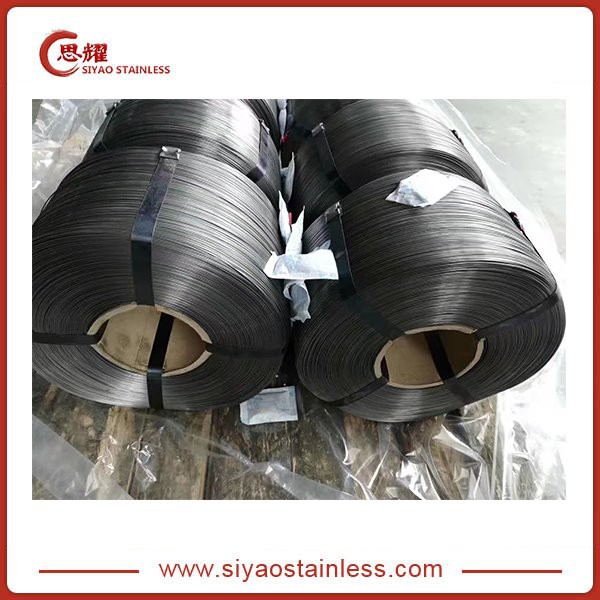
We offer a wide range of high strength steel wire products, including High Strength Carbon Steel Wire. This type of wire is known for its excellent strength and durability, making it suitable for a variety of uses such as in suspension bridges, prestressed concrete structures, and mechanical springs.
Our High Strength Steel Wire is also a top - choice for many industries. It's made with the right combination of raw materials and advanced manufacturing processes to ensure superior performance. Whether you need wire for heavy - duty construction or precision engineering, we've got you covered.
Why Choose Us?
- Quality Assurance: We have strict quality control measures in place at every stage of the production process. From the selection of raw materials to the final product inspection, we ensure that our high strength steel wire meets the highest standards.
- Customization: We understand that different customers have different needs. That's why we offer customized solutions. We can adjust the composition and properties of the steel wire according to your specific requirements.
- Expertise: Our team of experts has years of experience in the steel industry. They know how to optimize the raw materials and manufacturing processes to produce the best - quality high strength steel wire.
Let's Do Business
If you're in the market for high strength steel wire, we'd love to hear from you. Whether you're a construction company looking for reliable wire for your next project or an automotive manufacturer in need of high - performance steel wire, we can provide you with the right product. Contact us to start a procurement discussion, and let's work together to find the perfect high strength steel wire solution for you.

References
- ASM Handbook Committee. (2008). ASM Handbook, Volume 1: Properties and Selection: Irons, Steels, and High - Performance Alloys. ASM International.
- Degarmo, E. P., Black, J. T., & Kohser, R. A. (2003). Materials and Processes in Manufacturing. Wiley.
- Fundamentals of Steelmaking. (n.d.). World Steel Association.